
Home » Services » Corporate Tax » Capital Allowances
Capital Allowances

The cost of purchasing capital equipment in a business is not a revenue tax-deductible expense. However, tax relief is available on certain capital expenditure in the form of capital allowances, which serve as a deduction against taxable profits.
What can I claim capital allowances on?
Capital allowances are available on items that you keep and use in your business. Items that qualify for capital allowances are referred to as ‘plant and machinery’.
In many cases, capital allowances allow you to deduct the full cost of the capital expenditure from your profits before tax using the Annual Investment Allowance (AIA).
Businesses can claim capital allowances on:
- equipment
- machinery
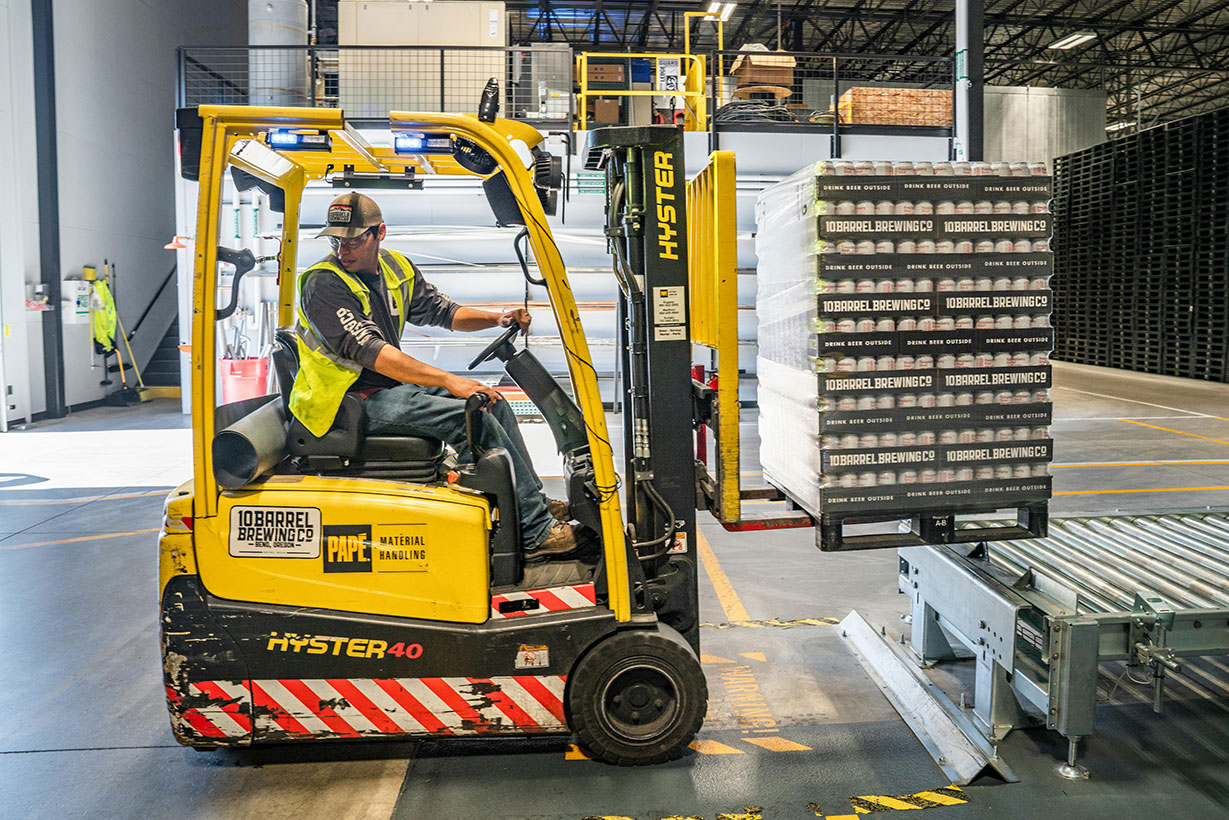
- business vehicles, for example, vans, lorries or business cars
For more information and complex rules on what you can claim capital allowances on download our capital allowances factsheet.

Can I claim capital allowances?
If your trading profits are chargeable to UK corporation tax or income tax, then you may be able to claim capital allowances.
Limited companies can use the Annual Investment Allowance (see details below).
For sole traders and partnerships, most capital equipment is treated as an expense that can be deducted from taxable income to reduce tax liability. Therefore, partnerships and sole traders using the cash basis to prepare accounts are usually only required to claim capital allowances on cars.
For more information on whether you can claim capital allowances, download our capital allowances factsheet.
What capital allowances can I claim?
The main capital allowances currently available are:
Annual Investment Allowance (AIA)
The Annual Investment Allowance (AIA) offers a 100% deduction for the cost of most plant and machinery (excluding cars) purchased by a business, up to an annual limit of £1 million, and is available to most companies.
AIA is split between group companies – i.e if there are two companies and one fully uses the £1m AIA then the other company cannot claim.
Where businesses spend more than the annual limit, any additional qualifying expenditure generally attracts an annual Writing Down Allowance (WDA). To find out more about AIA and Writing Down Allowance, download our capital allowances factsheet.
100% first-year allowances
Limited companies can claim 100% of the cost of new, unused items in the first year. This relief can significantly boost cash flow.
Companies can claim 100% first-year allowances in addition to the Annual Investment Allowance (AIA), provided the expenditure is not already claimed for the same purpose.
Companies can also claim ‘enhanced capital allowances’ (a type of 100% first-year allowance) for qualifying assets such as electric cars with zero CO2 emissions, zero emission goods vehicles and equipment for electric vehicle charging points. For a complete list of qualifying assets, download our capital allowances factsheet.
Full expensing and 50% first-year allowance
Only limited companies can claim full expensing and the 50% first-year allowance.
Full expensing allows you to deduct 100% of the cost of qualifying plant and machinery from your taxable profits in the year it was purchased.
The 50% first-year allowance lets you deduct 50% of the cost from your profits before tax in the year it was bought.
You can claim them against the cost of specific plant and machinery, as long as it is new, unused, and purchased on or after 1 April 2023. You cannot claim both allowances against the same expenditure.
To find out more about full expensing and 50% first-year allowance, download our capital allowances factsheet.
Capital allowances changes from April 2026
Writing Down Allowances (WDAs)
The rate of Writing Down Allowances (WDAs) for main pool expenditure will reduce from 18% to 14%.
Where a business incurs qualifying expenditure that is not covered by other capital allowances, relief will be given at the new 14% WDA rate on a reducing balance basis.
For accounting periods that straddle the implementation dates, a hybrid WDA rate will apply.

40% First Year Allowance (FYA)
A new 40% First Year Allowance (FYA) will be introduced from April 2026.
This allowance enables businesses to claim:
- 40% of the cost of qualifying plant and machinery in the year of purchase; and
- The remaining 60% to be relieved through Writing Down Allowances from year two onwards.
This represents a significant change, as the 40% FYA will be available for:
- Assets provided for leasing or hire, and
- Unincorporated businesses, in addition to limited companies.
The allowance will apply to qualifying expenditure incurred on or after the relevant commencement date and cannot be claimed alongside other first-year allowances on the same expenditure.
When the changes take effect
- 1 April 2026 – for businesses within the charge to corporation tax
- 6 April 2026 – for businesses within the charge to income tax
Where an accounting period spans these dates, the capital allowances available will be apportioned, with hybrid rates applying.
What This Means for Your Business
These changes may affect the timing of capital expenditure, projected tax relief and cash flow forecasts. Planning ahead will be key to maximising available relief and avoiding unexpected reductions in allowances.
Our tax team can help you assess the impact of these reforms and ensure your capital investment strategy remains tax efficient. Please contact us to discuss how the new capital allowances rules may affect your business.
40% First Year Allowance (FYA)
A new 40% First Year Allowance (FYA) will be introduced from April 2026.
This allowance enables businesses to claim:
- 40% of the cost of qualifying plant and machinery in the year of purchase; and
- The remaining 60% to be relieved through Writing Down Allowances from year two onwards.
This represents a significant change, as the 40% FYA will be available for:
- Assets provided for leasing or hire, and
- Unincorporated businesses, in addition to limited companies.
The allowance will apply to qualifying expenditure incurred on or after the relevant commencement date and cannot be claimed alongside other first-year allowances on the same expenditure.
100% first-year allowances
Limited companies can claim 100% of the cost of new, unused items in the first year. This relief can significantly boost cash flow.
Companies can claim 100% first-year allowances in addition to the Annual Investment Allowance (AIA), provided the expenditure is not already claimed for the same purpose.
Companies can also claim ‘enhanced capital allowances’ (a type of 100% first-year allowance) for qualifying assets such as electric cars with zero CO2 emissions, zero emission goods vehicles and equipment for electric vehicle charging points. For a complete list of qualifying assets, download our capital allowances factsheet.
Full expensing and 50% first-year allowance
Only limited companies can claim full expensing and the 50% first-year allowance.
Full expensing allows you to deduct 100% of the cost of qualifying plant and machinery from your taxable profits in the year it was purchased.
The 50% first-year allowance lets you deduct 50% of the cost from your profits before tax in the year it was bought.
You can claim them against the cost of specific plant and machinery, as long as it is new, unused, and purchased on or after 1 April 2023. You cannot claim both allowances against the same expenditure.
To find out more about full expensing and 50% first-year allowance, download our capital allowances factsheet.
Why choose Edwards Accountants for capital allowances advice
Understanding how capital allowances work can be complex, so you should seek professional advice from a capital allowances specialist.
Our expert team can help explain the allowances available to your business, ensure you maximise the benefits from your claims, and provide guidance on key areas such as the timing of capital asset purchases and sales.
Insights

As a company grows, acquires other businesses, builds up assets or brings in new shareholders, a structure that once worked...


Raising investment for a science or technology business can be difficult. Developing products, employing specialists and moving an idea towards...

Many tech company owners know about R&D tax relief and R&D tax credits, but far fewer realise they could also...
Choose Edwards Accountants today for your capital allowances
Are you looking to purchase capital assets for your business? Do you want to maximise your capital allowances claim? Do you need advice on the timing of the purchase or sale of a capital asset?